What does it take to trade meme coins like a pro instead of gambling?
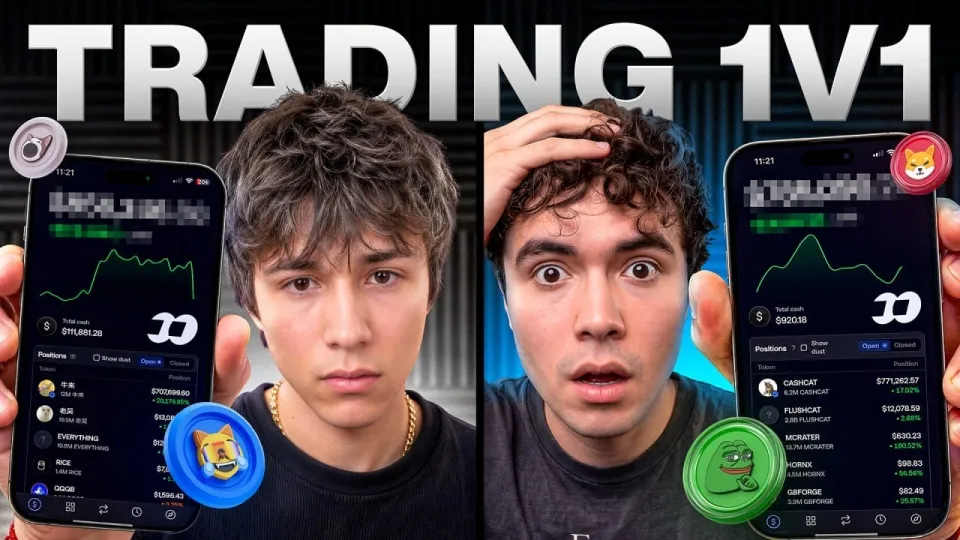
Video: I Challenged A Pro Memecoin Trader (Who Won?)
Want articles like this for your own video to promote it on YouTube and Google? Order them through the Telegram bot @sat_sit_bot. Articles with your video embedded are written and posted by the bot itself — on popular topical sites (no ads). Your first 50 articles are free.
· based on the channel insentos
Meme coin trading is short-horizon speculation on tokens with no cash flow, where the edge comes from execution speed, position sizing and reading liquidity rather than from fundamentals. Done with rules it is a high-risk skill game; done without them it is gambling with extra steps. The insentos challenge video, where the host trades live against a guest described as a professional meme coin trader, is a useful case study because the guest narrates his thinking while positions are open — and the tools used are linked in the description, including registration through fomo.family and the Axiom trading terminal.
What a meme coin actually is and why it moves so fast
A meme coin is a token whose price is driven almost entirely by attention, liquidity and reflexivity — new buyers pushing price up, price attracting new buyers — rather than by revenue or product. Supply is usually large, the float is thin at launch, and the entire order book can sit in a handful of pools on a decentralised exchange. That structure explains the speed: a few thousand dollars of buying can move a chart 40%, and the same amount of selling can erase it.
Three mechanics drive most of the violence:
- Thin liquidity. On Solana and Ethereum launchpads, the initial pool is small. Slippage is not a footnote; it is the main cost of doing business.
- Concentrated supply. If a few wallets hold a large share, they can exit into your bid. Holder distribution is a risk metric, not decoration.
- Narrative half-life. A meme trend can run for hours or weeks; the token rarely survives the narrative. Trading the wave is not the same as holding the token.
How the live challenge format exposes real meme coin trading
The insentos video works because the trading happens on a call, in real time, with the guest explaining entries and exits while he is in them. That format reveals what a written strategy guide cannot: how a trader reacts when a chart stalls, when volume dries up, or when a position goes against him. Viewers picked up on exactly this — one of the most-liked comments notes that the guest stayed informative mid-trade and kept asking the host about his thought process.
There is also a structural joke in the comments that is worth taking seriously: several viewers pointed out that the host, not the guest, is the one with the audience and the track record. In meme coins, distribution is an edge — a large account can move attention, and attention moves price. That does not make the trade risk-free, but it does mean that copying a trader with 200 followers and copying one with 200,000 are different propositions.
The core rules professional meme coin traders follow
Professional meme coin trading is mostly risk management wrapped around a fast execution loop. The traders who survive repeated cycles tend to share the same habits, regardless of which chain or terminal they use.
- Define the loss before the entry. Position size is set so that a total loss is a small, survivable percentage of the bankroll — not so that the upside looks exciting.
- Trade liquidity, not hope. Check pool depth and holder concentration before buying. If your own order moves the price several percent, your exit will move it more.
- Scale out on the way up. Taking partial profit at the first strong move removes the pressure to nail the top, which nobody does consistently.
- Cut dead positions fast. A meme coin that stops making higher highs while volume fades is a decaying asset. Time is a cost.
- Separate research from execution. Tools like Axiom exist because scanning, charting and routing an order in one place saves seconds — and seconds are the product.
- Keep a written log. Entry reason, exit reason, result. Without it, every cycle feels like the first one.
Why most beginners lose money on meme coins
Most beginners lose because they enter late, size too big, and hold through the moment that made the trade work. The comment section of the challenge video captures the scepticism plainly: viewers note that similar videos often end in a loss, and that trading from an influential account is a different game from trading a small one. Both points are correct and neither is an argument against learning — they are arguments against copying trades blindly.
The typical failure sequence looks like this: a token is already up several hundred percent when it appears on a timeline; the beginner buys the top of the first leg; the first pullback triggers panic; the position is sold at a loss right before a bounce; the bounce is chased again with a bigger size. Each step is emotionally rational and financially expensive.
A second, less discussed problem is infrastructure. Beginners trade on slow connections, with default slippage, on tokens they have not verified, and without a plan for how to exit if the pool drains. In meme coins the operational details — wallet hygiene, slippage settings, knowing which contract you are buying — are part of the strategy, not admin.
What viewers of the challenge actually wanted to know
The questions raised under the insentos video cluster around a few practical themes, and they are the same questions new traders ask in every cycle. The most common request was for a small-bankroll format — a 50-to-1000 style challenge — because most viewers do not start with a professional-sized account. That is a fair ask: the maths of risk changes completely when a position is $40 rather than $4,000, and fees plus slippage eat a much larger share.
A second theme was access. Several viewers noted that communities and groups are promoted constantly but are hard to actually join, which is a reminder to judge a trading group by what it publishes publicly, not by what it promises behind a paywall. A third theme was simply gratitude for visible strategy: people want to see entries and exits as they happen, not a retrospective chart with arrows drawn afterwards.
The honest answer to all three is the same: watch the process, not the outcome. A single session proves nothing about edge; a hundred logged trades with consistent sizing is data.
Useful links
- fomo.family referral link from the video — registration and community access.
- Axiom trading terminal — the execution platform referenced in the description.
- insentos on X, Instagram and TikTok — the channel's short-form content.
The takeaway from the insentos meme coin challenge
The insentos challenge is valuable less as a scoreboard and more as a demonstration of process: a trader narrating entries, exits and reasoning while the position is live. What separates a professional from a gambler in meme coins is not a secret indicator but sizing, liquidity awareness and the discipline to take profit and cut losses without negotiation. Viewers asking for a small-bankroll challenge are asking the right question, because the strategy that works on a large account does not transfer unchanged to a small one. If you want to follow the format further, start with registration via fomo.family and treat every session as a logged experiment rather than a payday.
Key takeaways
- Meme coin trading is a short-horizon speculation game where liquidity, holder distribution and exit speed matter more than the story.
- The insentos challenge video pits the host against a guest trader on a live call, with the guest explaining his thought process while trading.
- Viewers repeatedly asked for a 50-to-1000 style bankroll challenge, showing demand for small-account, high-risk formats.
- Axiom and fomo.family are the two tools linked in the video description, covering execution and community research.
- Most commenters said such videos are the most useful format for beginners because the strategy is visible in real time.
Source: I Challenged A Pro Memecoin Trader (Who Won?) · Markdown version
Questions & answers
Is meme coin trading actually profitable or is it just gambling?
It can be either, and the difference is process. Traders who fix position size, check liquidity and holder concentration, and take partial profits are running a risk-defined strategy with a negative-to-positive expectancy that can be measured over many trades. Without those rules, the outcome is determined by luck and timing, which is gambling.
How much money do you need to start trading meme coins?
You can start with a small amount, but the economics are worse: network fees and slippage take a larger share of a $50 position than of a $5,000 one. A practical approach is to start with an amount you can lose entirely, keep each position a small fraction of it, and only scale once you have a logged record of results.
Why do so many traders lose money on Solana meme coins?
Thin liquidity and concentrated supply mean the price can reverse faster than a slow exit can execute. Beginners typically buy after the first large move, size too aggressively, and sell during the first pullback, then repeat the pattern. Speed of execution and pre-planned exits matter more than picking the right token.
What tools do traders use to trade meme coins faster?
Most use a dedicated terminal that combines token scanning, charting and order routing, which is why the insentos video points to Axiom. Community and research access is often handled separately, for example through fomo.family. The tool does not create an edge by itself, but it removes delays that cost money on fast moves.